Building a real-time interactive video platform and the design system behind it.
Type
Application
Design System
Role
Senior Product Designer
Team
Product Designer(2)
Engineer(3)
Project Manager(1)
Skills
Research
Product Design
Usability testing
OVERVIEW
Working with Amazon IVS to build an app and design system.
During my 3 years working with Amazon IVS, I designed the UGC (User Generated Content) live streaming web app end to end from discovery through handoff and QA, working closely with engineers, a PM, and another designer. As scope expanded, I took ownership of defining a shared design system to keep the product scalable and teams aligned.
PROBLEM
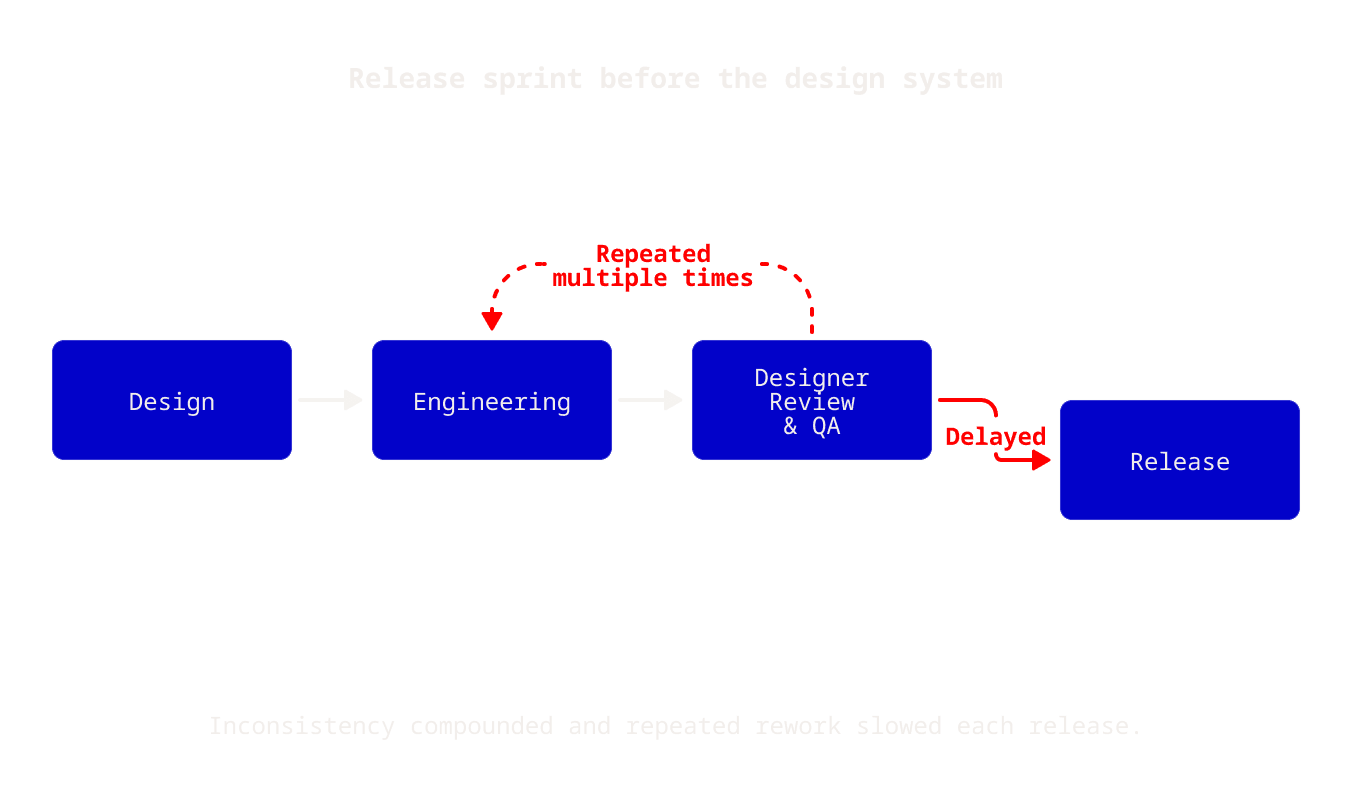
Each release added complexity faster than the team could absorb it.
As new live streaming features shipped, inconsistencies and issue tickets multiplied. Misalignment between design and engineering increased review cycles, QA fixes, and slowed delivery with every release.
APPROACH
Scaling the product required a system that could equally scale.
A design system introduced short-term overhead but offered the clearest path to long-term consistency and speed. I audited existing UI, identified patterns, and standardized the most frequently used components first—building modular components while continuing product delivery. This allowed the system to grow alongside the product, reducing risk while maintaining momentum.
Execution
A design system built to scale with complexity.
Within the design system, components were built with tokens and variables to support multiple use cases without creating new variants. Documentation captured when and how to use each component, tracked changes over time, and translated design decisions into clear implementation guidance for engineers.
Final Product
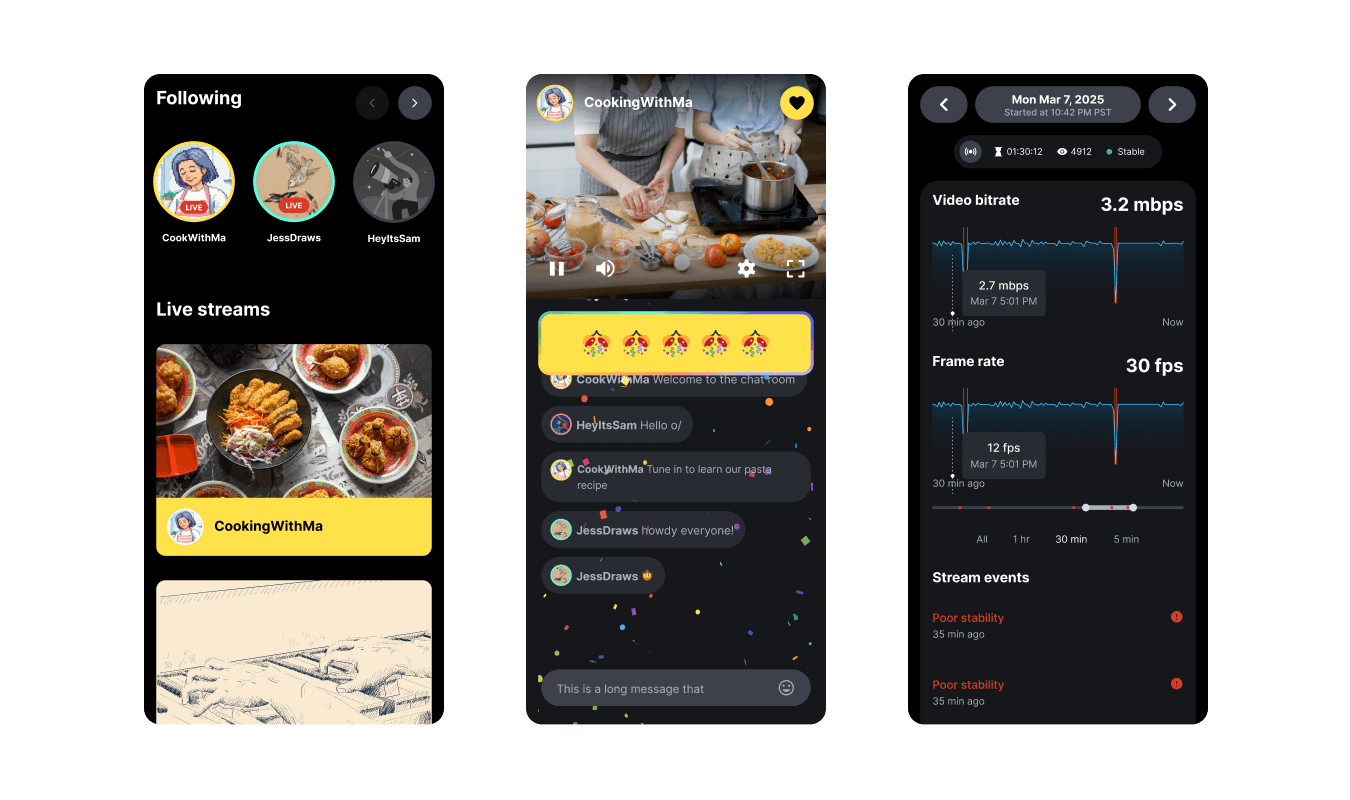
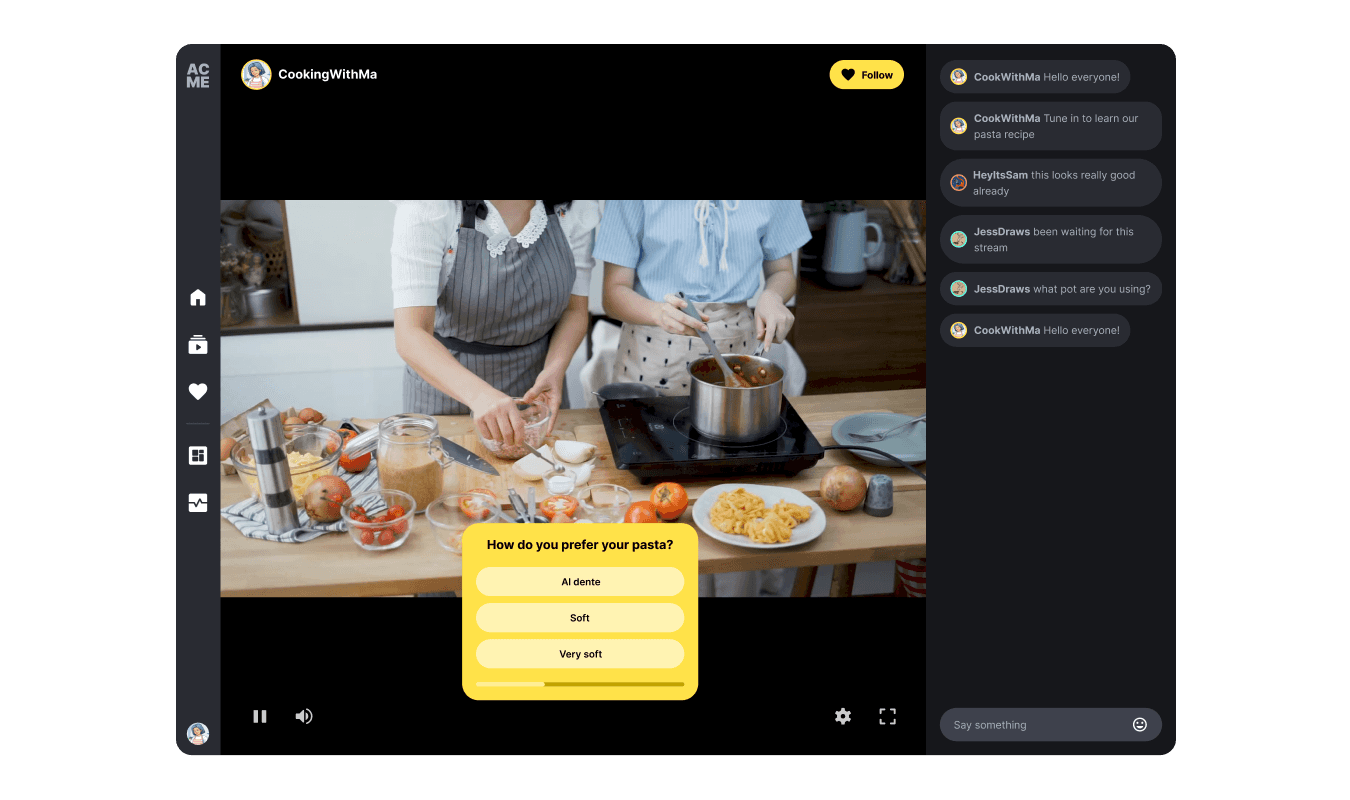
Real-time streaming and interactivity.
The live stream combined video, chat, and interactive modules within a consistent framework, allowing quizzes, products, notices, and celebrations to integrate, enabling new forms of engagement.
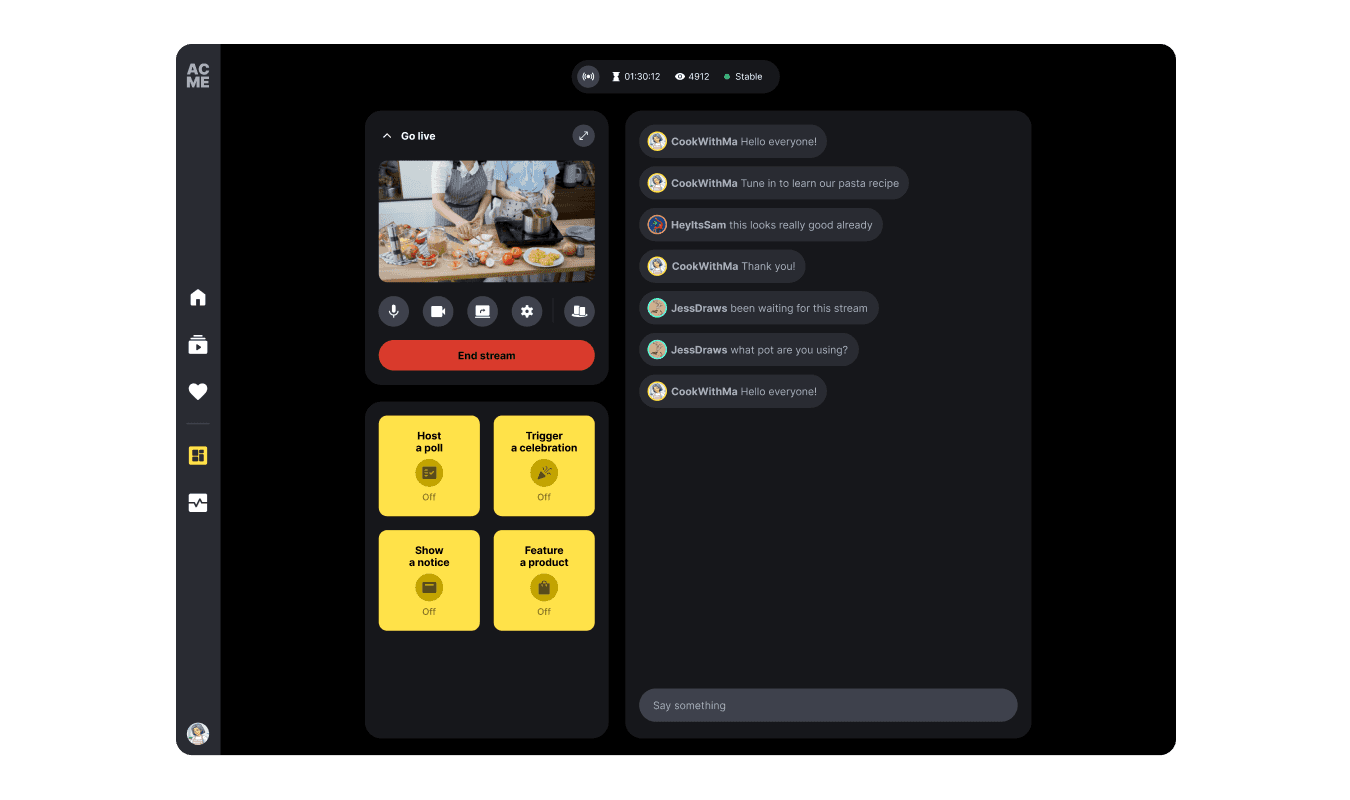
A single control surface for managing live streams.
The streamer dashboard centralized stream broadcast setup, monitoring, and live interactions into one predictable control surface.
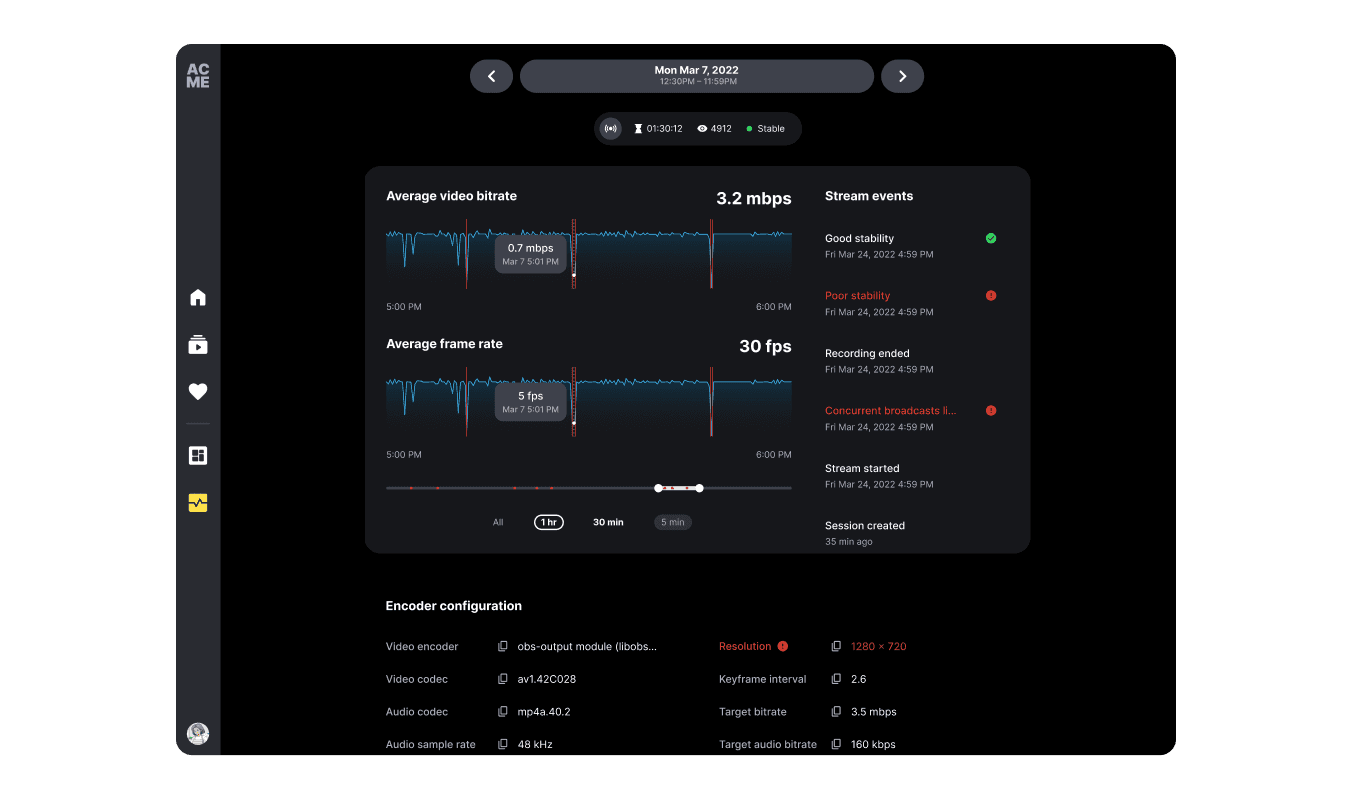
Clear diagnostics for stream performance.
Stream health surfaced real-time performance signals using consistent status language and severity indicators. This made issues immediately visible and easier to diagnose while streaming.
RESULTS & REFLECTION
Scaling required a system, not more screens.
The design system reduced inconsistency, shortened review cycles, and made it easier to add new features without compounding complexity. What began as feature delivery evolved into platform thinking—designing rules that allowed the product to grow without slowing teams down.